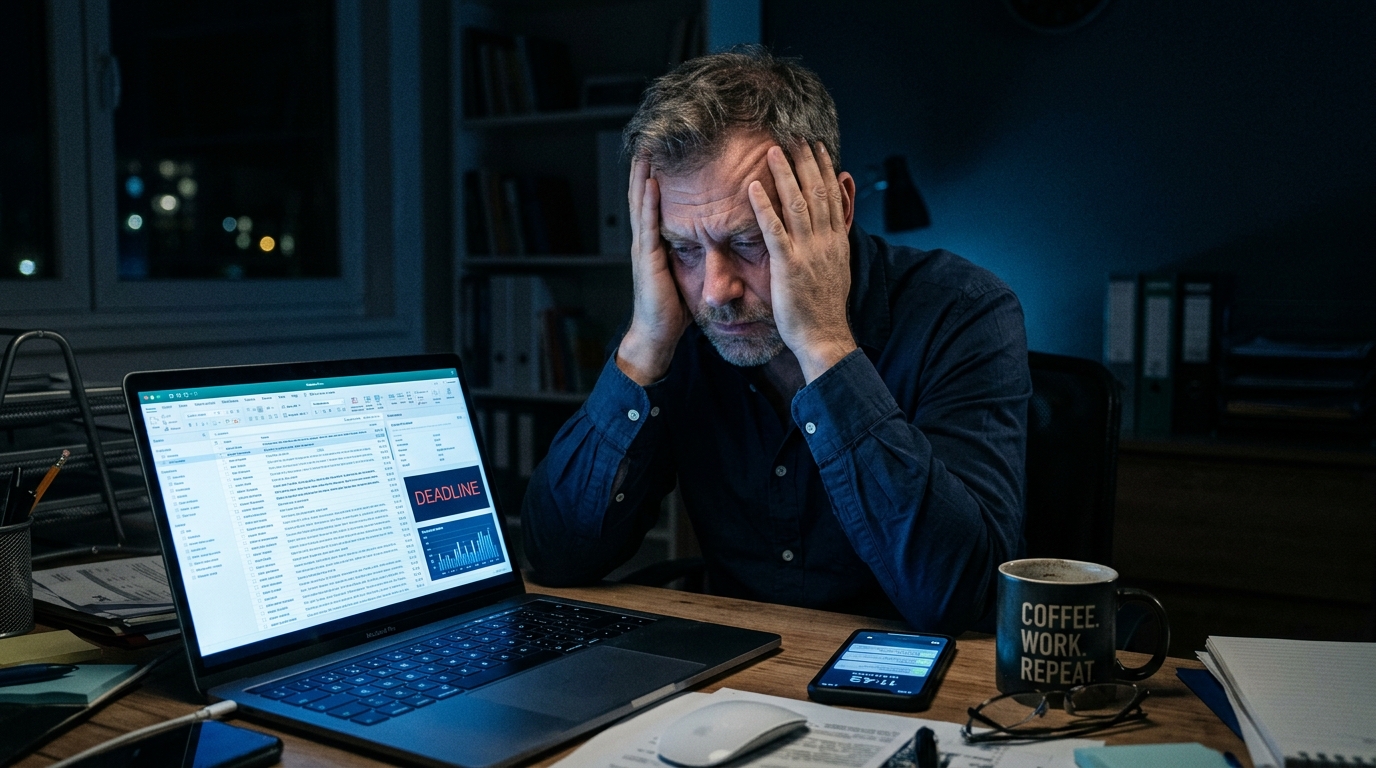
How Stress Affects Testosterone — And How to Take Back Control
You already know stress makes you feel wired, tired, and short-fused. What most men don't realize is that the same stress response quietly working in the background is also draining the one hormone that drives your energy, strength, and drive: testosterone.
16 Jul 2026 • 4 min read
TABLE OF CONTENT
TABLE OF CONTENT
What Are Stress Hormones?
Stress hormones are chemical signals your body releases when it senses pressure. Three do most of the heavy lifting:
- Cortisol — your “get things done” hormone
- Adrenaline — the fight-or-flight surge
- Norepinephrine — focus and alertness
These hormones are designed to protect you and keep you alive. The problem? Modern life keeps them turned on far more than they were ever meant to be.
Why Your Stress Response Never Shuts Off

It isn’t just major life events. Everyday habits keep your stress response idling in the background:
- Poor sleep or an inconsistent schedule
- Overtraining
- Skipping meals or under-eating
- High caffeine intake
- Constant notifications and emails
- Work, relationships, and finances
Your body doesn’t really distinguish between a looming deadline and a lion chasing you. It just reacts — and it reacts the same way whether the threat lasts five minutes or five months.

How Chronic Stress Lowers Your Testosterone
This is where stress stops being a mood problem and starts being a hormone problem.
Your body makes cortisol and testosterone from some of the same raw materials. When stress is constant, your system prioritizes survival: it keeps pumping out cortisol, and testosterone production takes a back seat. Elevated cortisol also directly suppresses the signals from your brain that tell your body to produce testosterone in the first place.
The result is a slow slide that’s easy to blame on “just getting older”:
- Lower energy and afternoon crashes
- Reduced muscle mass and slower recovery from workouts
- Decreased libido and weaker performance
- Stubborn belly fat, driven partly by the cortisol–testosterone imbalance
- Low mood, poor focus, and worse sleep — which then feed even more stress
Stress doesn’t stay in one lane. Cortisol pulls from the same pool your body uses to make other hormones, so chronically high stress can ripple across your whole endocrine system — not just testosterone.
The Signs Your Stress Hormones Are Out of Balance
A short spike in cortisol is normal and healthy. The problem is when it never comes down. Watch for:
- Waking up tired even after a full night’s sleep
- Feeling “wired but exhausted” at night
- Relying on caffeine to get going and something to wind down
- Losing your edge in the gym despite the same effort
- Low motivation, low drive, and a shorter fuse
If several of these sound familiar and they’ve stuck around for weeks or months, it’s worth looking under the hood rather than pushing through.
Natural Ways to Lower Cortisol and Protect Your Testosterone

You don’t need a complete life overhaul to start seeing improvement. Start here:
- Prioritize sleep — aim for 7–9 hours on a consistent schedule
- Eat balanced meals consistently — don’t skip, don’t crash-diet
- Get sunlight in the morning to anchor your natural cortisol rhythm
- Move your body, but don’t overdo it — overtraining raises cortisol
- Practice down-regulation daily — actively teach your body to switch off
A few simple daily reset tools go a long way:
- Deep breathing
- Walking outside
- Journaling
- Quiet time without screens
Even 10–15 minutes a day can make a noticeable difference.
Here’s the part most men miss: your other hormones don’t just get affected by stress — they also change how well you handle it. Healthy testosterone improves resilience, motivation, and recovery from stress. Balanced hormones and lower stress reinforce each other in a loop. The trick is getting that loop spinning in the right direction.
When Lifestyle Isn't Enough: Test, Don't Guess
Sleep, food, and stress management are the foundation, and for a lot of men they’re enough to feel like themselves again. But if you’ve cleaned up the basics and still feel flat — low energy, low drive, no gym progress — it may not be “just stress.” It may be that chronic stress has pushed your testosterone genuinely low.
The only way to know is to measure it. At Men’s Revival, we run comprehensive bloodwork to see exactly where your hormones stand, then build a plan around your labs, your symptoms, and your goals — whether that’s lifestyle coaching, testosterone optimization, or both. It’s the difference between guessing and knowing.
If any of this sounds like you, reach out to our team for a consultation.
Frequently Asked Questions
Does stress really cause low testosterone? Chronic stress can meaningfully lower testosterone. Sustained high cortisol suppresses the brain signals that drive testosterone production and shifts your body’s resources toward making more cortisol. A single stressful week won’t tank your levels, but months of unmanaged stress can.
Can lowering cortisol raise my testosterone? For many men, yes — at least partly. Improving sleep, nutrition, and stress recovery removes the brake that high cortisol puts on testosterone production. If levels are already significantly low, lifestyle changes plus medical evaluation give you the clearest path forward.
How do I know if it’s stress or actually low testosterone? The symptoms overlap heavily, which is why guessing doesn’t work. Bloodwork is the only way to tell whether you’re dealing with a stress problem, a testosterone problem, or both — and to build the right plan.
What’s the fastest thing I can do today? Protect your sleep and get morning sunlight. Both directly influence your cortisol rhythm, and better sleep is one of the most reliable ways to support healthy testosterone.
The takeaway: stress hormones aren’t something to eliminate — they’re essential. But when they stay elevated for too long, they can quietly disrupt everything from your energy to your testosterone. The goal isn’t a stress-free life. It’s helping your body recover from stress more effectively — and making sure your hormones are working with you, not against you.
Medical content reviewed by Dr. Jordan Kopcio, DC, NMD. This article is for educational purposes and is not a substitute for evaluation by a qualified healthcare provider.